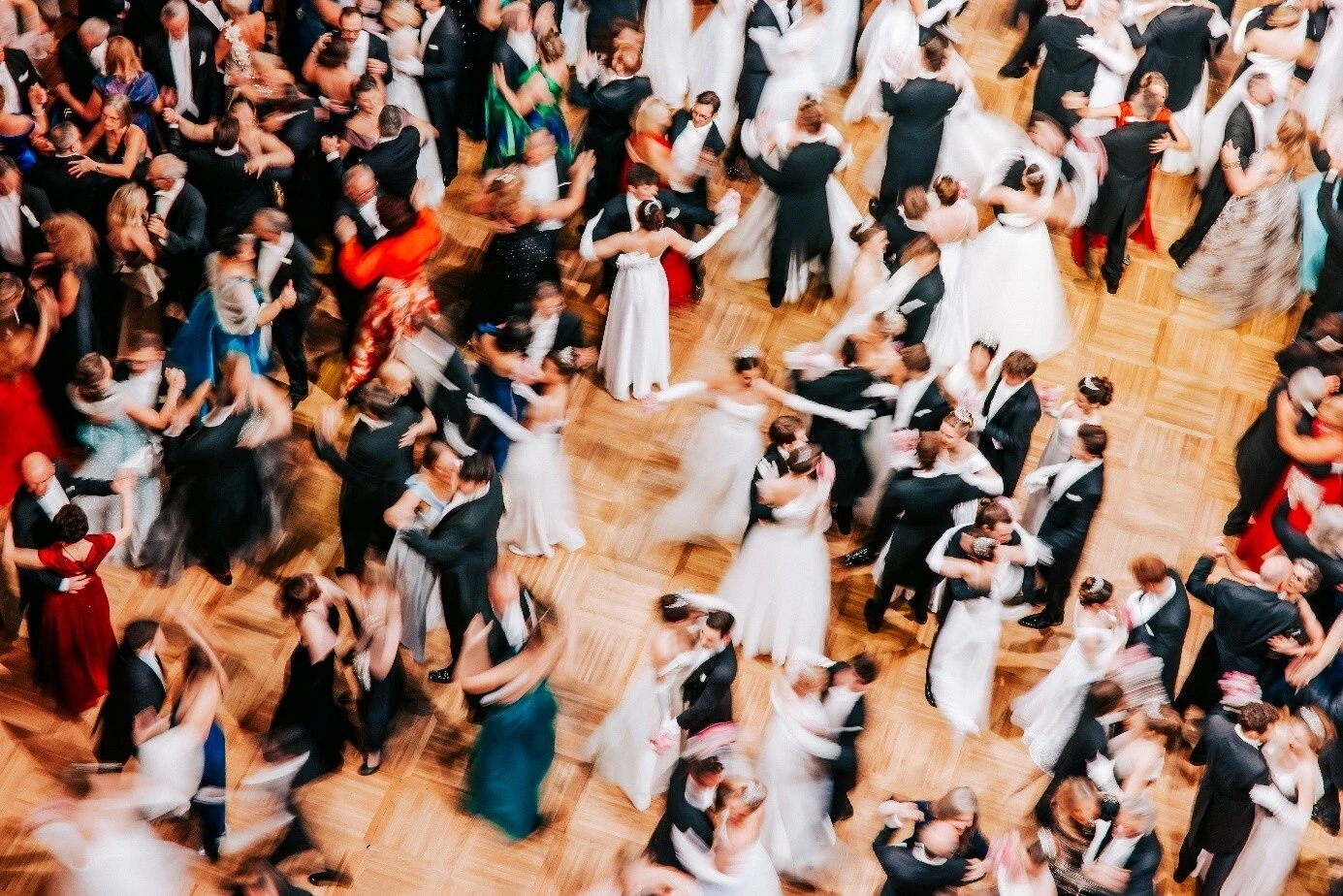
Elegant ball gowns, tailcoats, the sound of waltzes and a glass of champagne in hand. For many people, attending the Vienna Opera Ball is a lifelong dream. When the lights in the Vienna State Opera shine a little brighter than usual and the words “Alles Walzer!” are called, a night of splendour and unforgettable moments begins.
The Opera Ball is far more than a social event. It embodies Viennese lifestyle and living tradition, while at the same time standing as an international highlight that captivates millions every year. In this blog article, you will discover everything you need to know about the Vienna Opera Ball – from its history and dress code to tickets, culinary highlights and exclusive Sacher insider tips for an unforgettable ball night.
When did the Vienna Opera Ball begin?
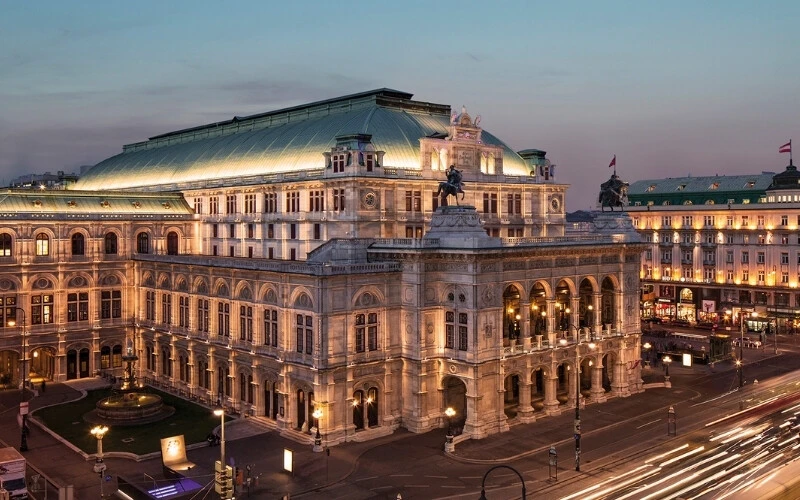
The history of the Opera Ball dates back to the early 19th century. Inspired by the magnificent opera balls of Paris, the first exclusive dance events in aristocratic circles already took place during the Congress of Vienna in 1814/15. With the opening of the Imperial and Royal Court Opera on the Ringstrasse, the first so-called Court Opera Soirées were held from 1877 onwards. These elegant musical evenings are considered the direct predecessors of today’s Opera Ball. They were soon followed by redoutes, costume balls whose proceeds were used to support the Opera Pension Fund. The earliest documented predecessor of the Opera Ball took place on 11 December 1877.
The first official Vienna Opera Ball
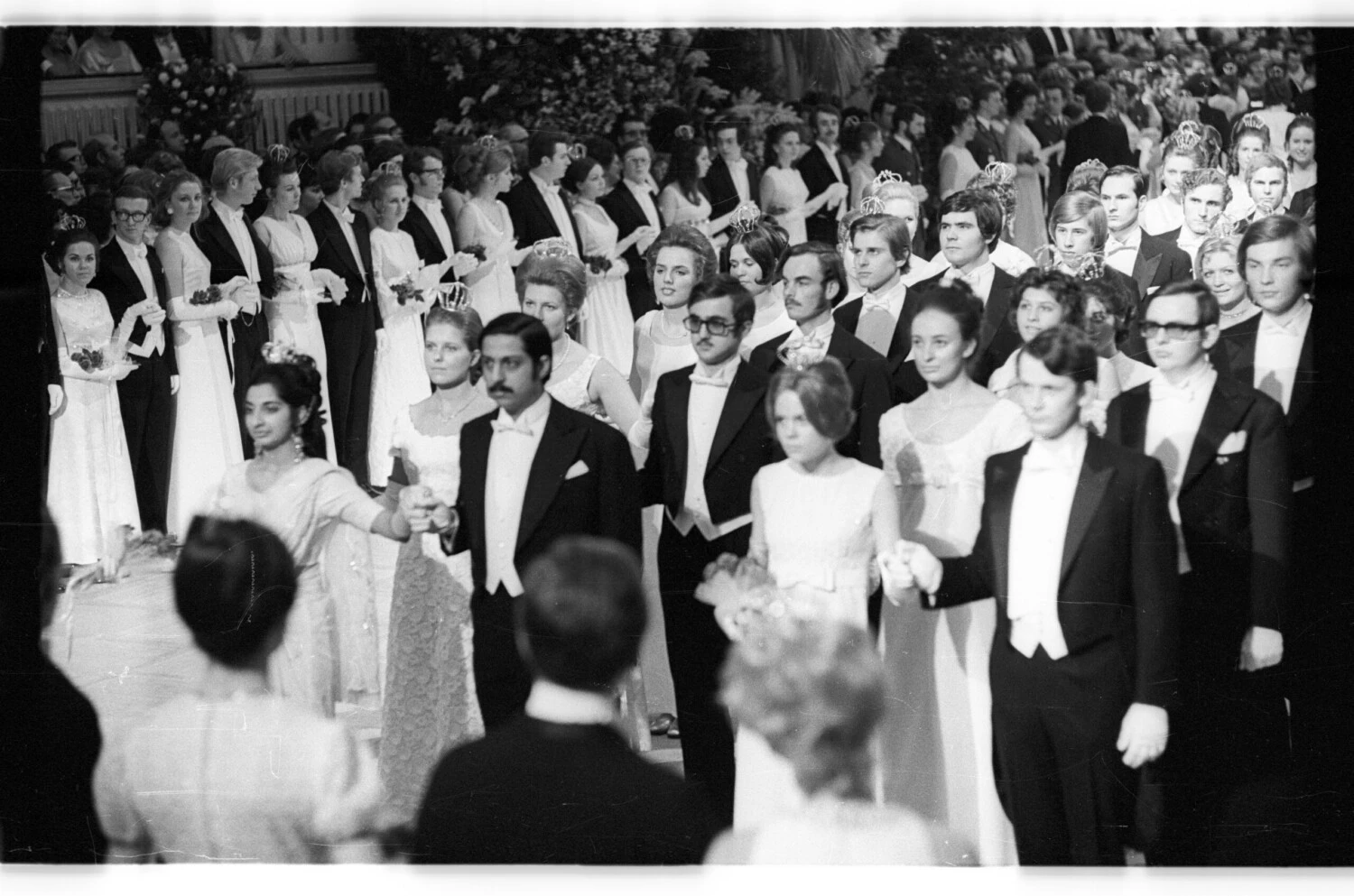
It was not until 1935 that the ball officially adopted the name by which it is known around the world today: the Vienna Opera Ball. The event quickly became a prestigious meeting place for politics, culture and diplomacy. Around this time, the date, the last Thursday of the carnival season, was established and remains a fixed highlight of the social calendar to this day.
Do you know the exact date of the first Opera Ball? On 26 January 1935, the first officially named Vienna Opera Ball took place at the Vienna State Opera, marking the beginning of the tradition as we know it today.
Post-war years and the reopening in 1956
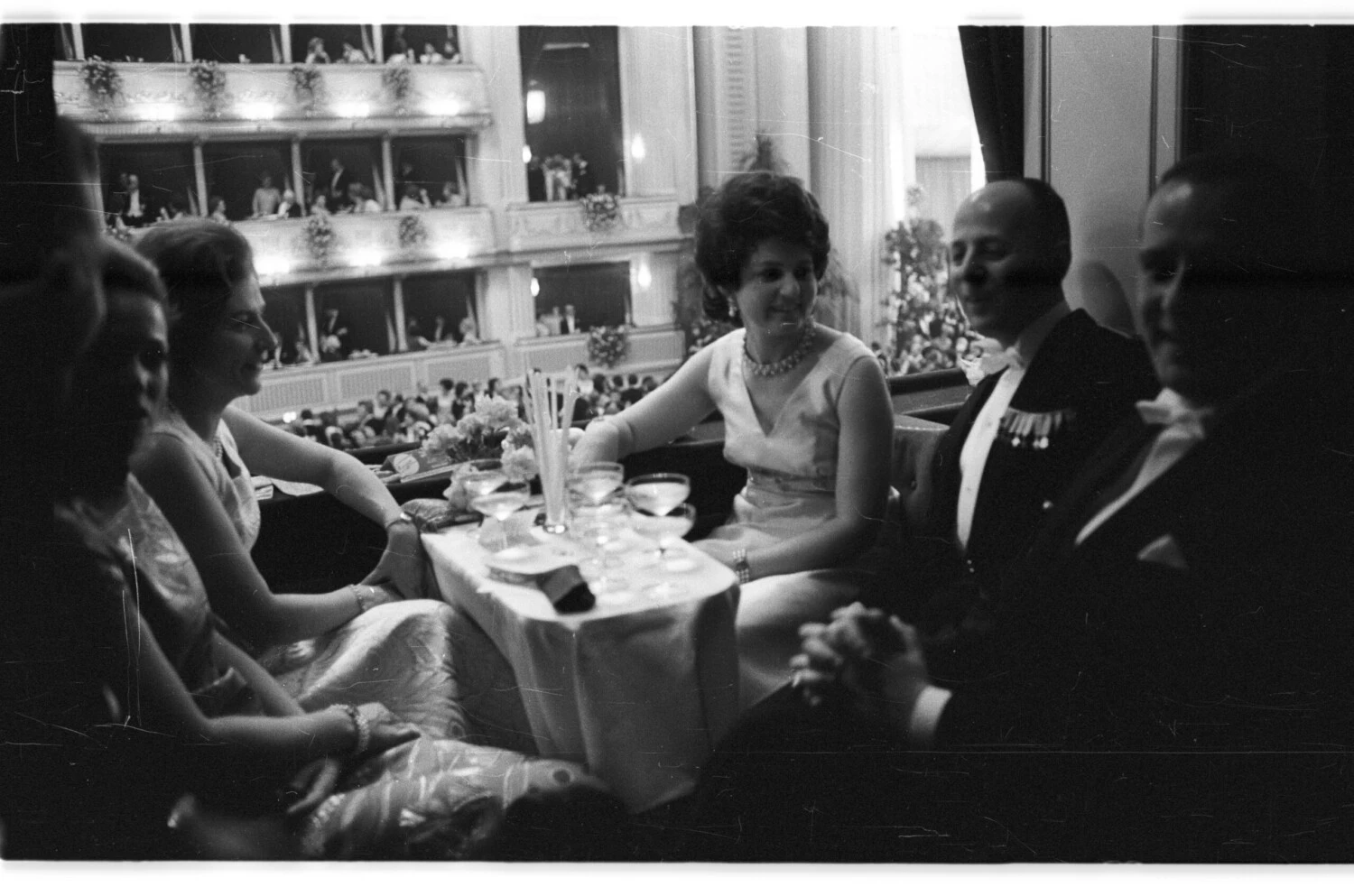
After a hiatus during the Second World War, the Vienna State Opera was ceremoniously reopened in 1955. Just one year later, in 1956, the Opera Ball also returned and once again evolved into the country’s most important social event. From that point on, the ball became closely linked to Austria’s post-war modern era, shining each year as a symbol of elegance, optimism and cultural confidence.
The Vienna Opera Ball as it is today
Today, the Opera Ball combines tradition with contemporary culture. Since 2011, the Vienna Philharmonic musicians, together with the Vienna Opera Ball Orchestra of around 150 musicians, have officially taken part, lending the opening a musical brilliance that is truly unique worldwide. Modern measures such as a comprehensive smoking ban, improved accessibility and innovative stage technology have adapted the event to the present day without altering its historic character.
Alongside approximately 5,100 guests inside the State Opera, around 2.5 million viewers follow the live broadcast each year, making it one of Austria’s most-watched television events. Beyond its wide public appeal, the Vienna Opera Ball also plays an important role for Vienna’s economy, particularly as a major driver of tourism.
The ball is also known for its glamorous pop culture moments featuring internationally renowned personalities. Since the 1990s, the well-known society figure Richard Lugner (†12 August 2024) was accompanied to the Opera Ball by numerous international stars, including Priscilla Presley, Kim Kardashian, Jane Fonda and Conchita Wurst, among many others. Austrian personalities also shape the event, such as Opera Ball hosts and presenters Alfons Haider, Mirjam Weichselbraun and Silvia Schneider, who have accompanied the ball in the media for many years.
Behind the scenes, the Opera Ball Committee, led by Opera Ball organiser Susanne Athanasiadis, ensures a seamless experience. From the debutantes’ rehearsals to the meticulous logistics that transform the Vienna State Opera into the country’s largest ballroom for a single night.
The opening of the Opera Ball
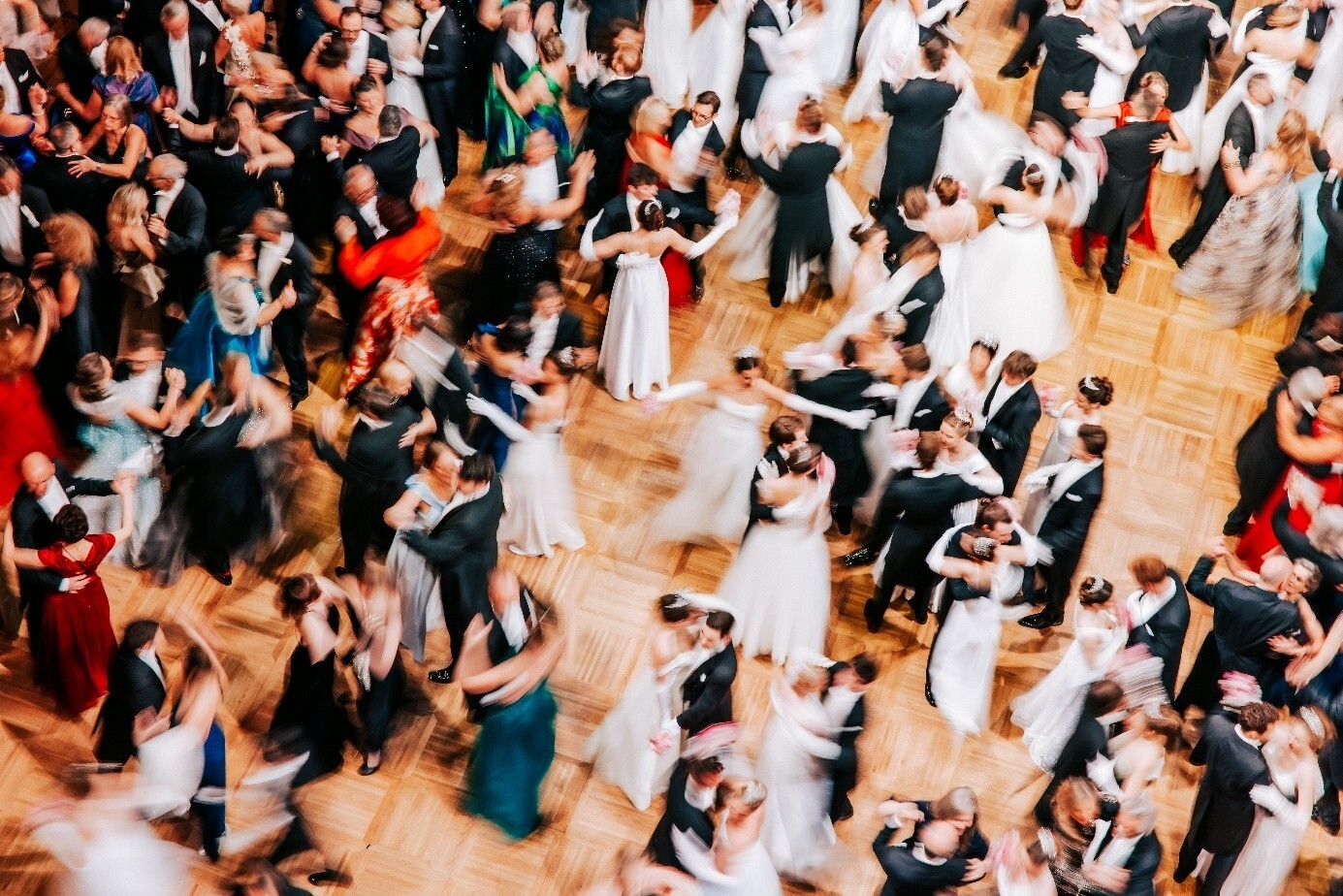
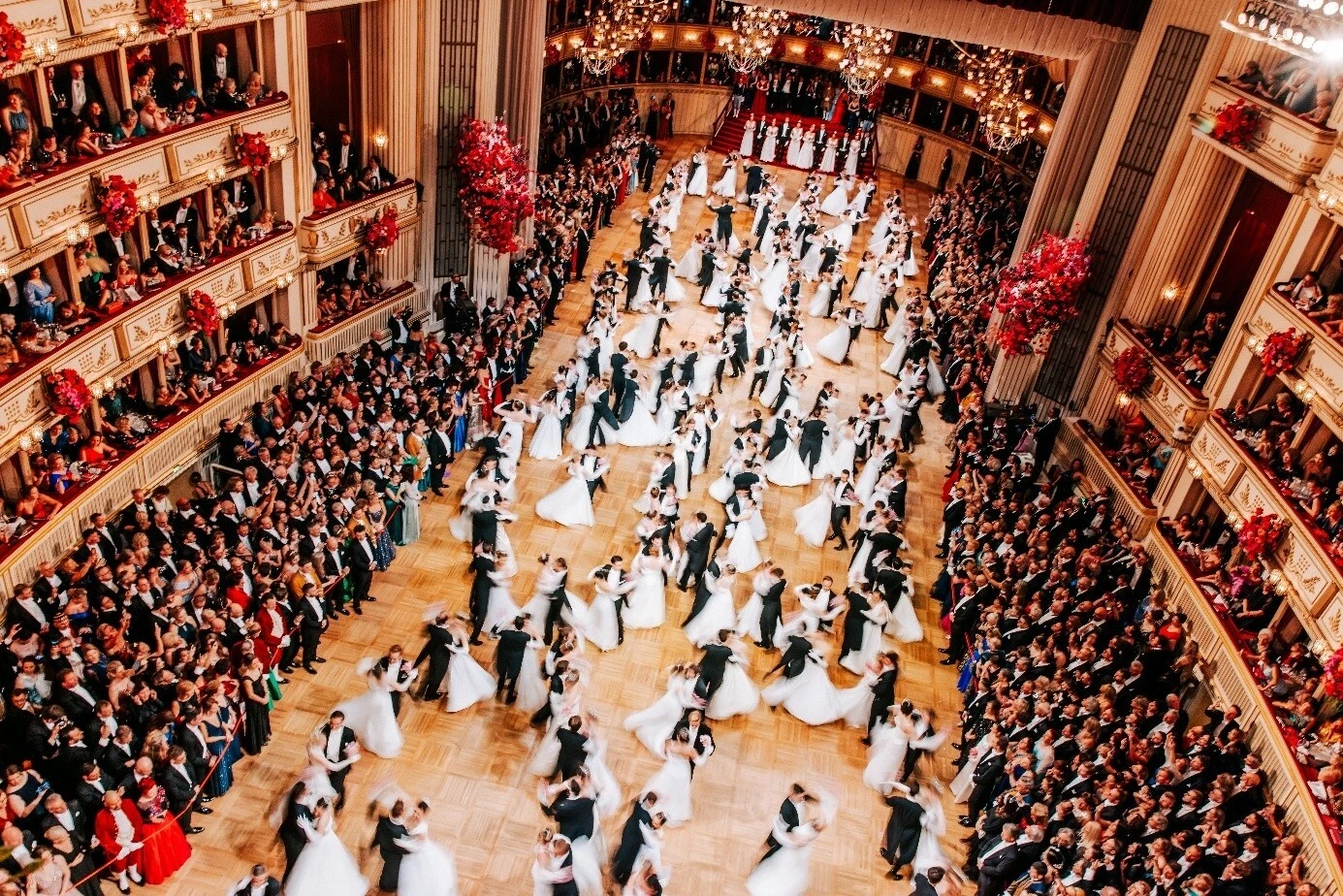
The Opera Ball begins with a moment watched by audiences around the world: the ceremonial entrance of approximately 160 debutante couples (320 dancers). They form the opening committee, whose choreography has been one of the ball’s most important traditions for decades.
Following the national anthems and musical performances by the Vienna State Opera, the well-known call “Alles Walzer!” is heard, signalling the start of the Viennese Waltz. With these two words, the dance floor is opened to all ball guests, a highlight of the Opera Ball night.
Quadrille, Waltz and the Radetzky March
Throughout the night, classical Viennese dances set the rhythm of the ball. Over the course of the evening, three quadrilles are danced, a French contra dance consisting of six parts: the Midnight Quadrille, one at 2 am, and another at 4 am The ball officially concludes at 5 am, accompanied by two musical classics that are inseparable from Vienna. Can you guess which ones? The Blue Danube Waltz and the Radetzky March, a finale that continues to delight guests from around the world year after year.
When and where does the Opera Ball take place?
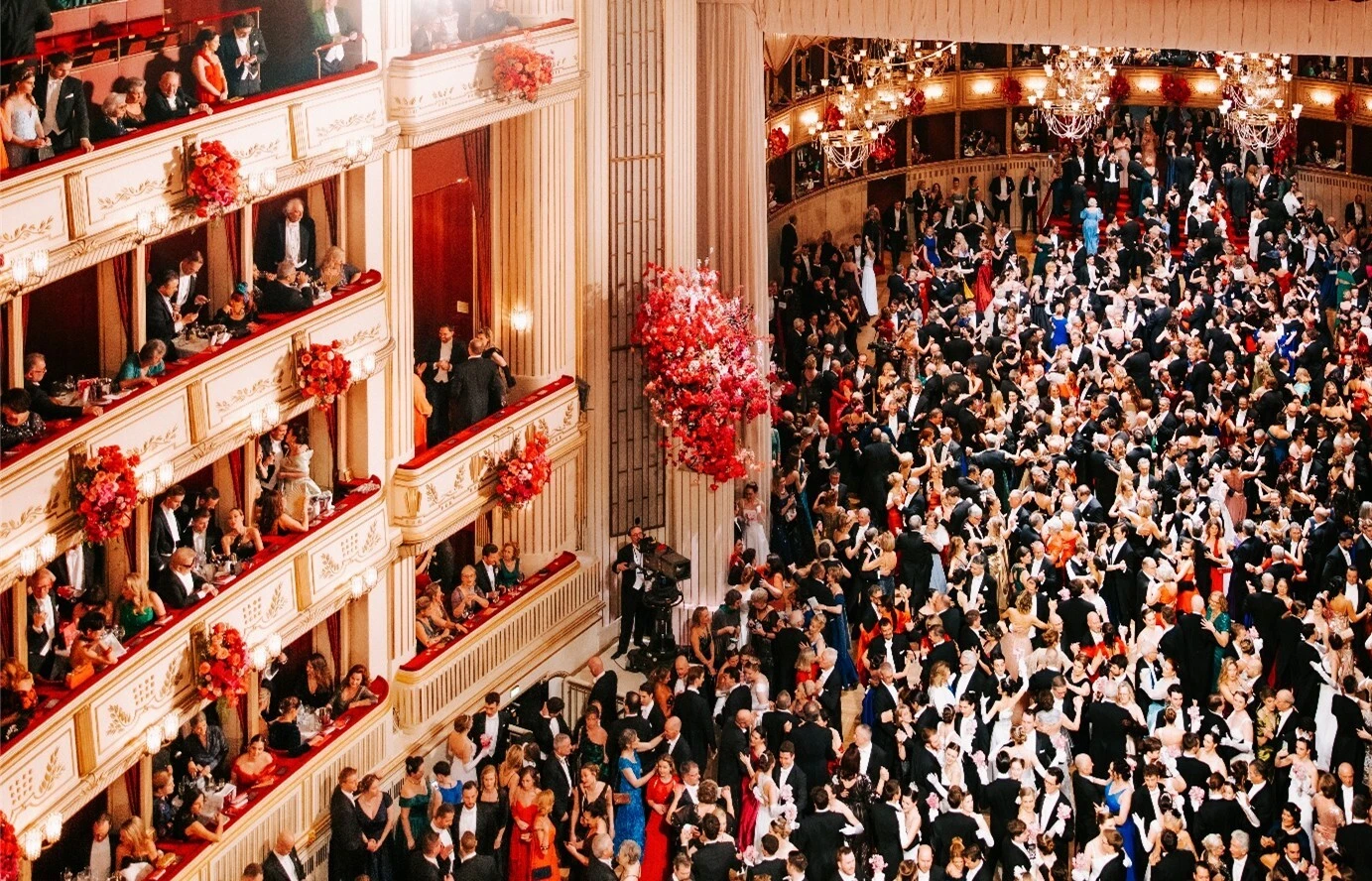
The Vienna Opera Ball takes place every year on the last Thursday before Ash Wednesday, a fixed date in Austria’s carnival season. For this one special night, the Vienna State Opera is transformed into a magnificent ballroom in just 30 hours. Orchestra stalls and seating rows make way for an approximately 800 m² dance floor, where more than 5,100 guests later stroll and dance.
Located directly at Karlsplatz, the State Opera is easily accessible via underground lines U1, U2 and U4, as well as tram lines 1, 2, D and 71. For those wishing to experience the Opera Ball in its most elegant form, Hotel Sacher Wien is situated immediately opposite, offering the shortest possible walk from the ball back to a deluxe room or an elegant suite, ideal for guests who value modern luxury, tradition and immediate proximity to the State Opera.
Tickets, Prices and Seating
Tickets for the Vienna Opera Ball are issued exclusively by the Vienna State Opera. Demand is extremely high each year, which means that waiting lists, lotteries or allocation procedures may apply depending on the category. The main ticket types include general admission tickets, table seats and the highly sought-after boxes.
Wondering how much a ticket to the Opera Ball costs? General admission tickets start at approximately €410 (as of 2026). The more exclusive the seating, the higher the price, ranging from several hundred euros to five-figure sums for private boxes.
Ticket types explained
Depending on the desired level of comfort and exclusivity, the Vienna Opera Ball offers a range of different ticket categories. From general admission tickets to private boxes, the experience and pricing vary significantly.
• General admission tickets
The entry point into the world of the Opera Ball. These tickets grant access to all publicly accessible areas of the ball but do not include a reserved seat.
• Opening ceremony viewing tickets
Viewing tickets for the opening ceremony guarantee a reserved seated or standing place with a good view of the dance floor. Prices range between €100 and €250 (including a donation), depending on the category. These tickets are available only in combination with a regular admission ticket. Alternatively, the opening ceremony can be followed via live streams on screens throughout the State Opera.
• Table seats
Table seats are available in the foyers and adjoining halls and offer a comfortable place to pause and relax during the evening. Prices are in the upper three-digit range per person.
• Boxes (stage and ranking boxes)
This is the most exclusive way to experience the Opera Ball. Stage and ranking boxes offer privacy and excellent views of the opening ceremony. Prices typically start at €15,000–25,000 and can be significantly higher depending on location. Many boxes are allocated to long-standing supporters or donors, meaning availability is limited.
Good to know: The most expensive category is the ranking boxes. Accommodating around 12 guests, they are located directly within the auditorium opposite the stage and offer an exclusive view of the dance floor. Prices are €26,000, often with pre-purchase rights for donors of the Vienna State Opera.
Table shares are a more accessible alternative to booking an entire box. Guests purchase a share of a table or box, offering a flexible way to enjoy a more exclusive setting.
Purchase process
Tickets are sold exclusively through the Vienna State Opera. Resale or commercial ticket brokerage is strictly limited in order to ensure fair access. The allocation of certain categories, particularly boxes, may vary depending on demand, which is why early inquiries are recommended. Further details on the purchasing process can be found below.
General admission tickets are allocated several months in advance via an online registration window on the Vienna State Opera website. Allocation is carried out by lottery, not on a first-come, first-served basis. A maximum of four tickets may be requested per application. All applicants are subsequently informed by the Vienna State Opera. If tickets are not allocated, applicants are automatically placed on a waiting list, which is also generated at random. Should additional tickets become available and an applicant be selected, the Vienna State Opera will notify them. Once tickets are allocated, the purchase must be completed within a specified time frame.
Table seats can be requested via a separate form after the ticket lottery has been completed. These requests are generally processed in the order in which they are received. Various table seat locations are available, including the side stage, backstage, Parterre foyer, Opera foyer, Marble Hall or the Gallery. A detailed description of each area can be found on the Vienna State Opera’s website.
Spectator tickets allow guests to follow the opening ceremony in the ballroom from the gallery, balcony or stalls. They are available only in combination with a general admission ticket and are not valid on their own. Interest in spectator tickets can be indicated during the lottery application process. Due to very limited availability, allocation cannot be guaranteed. Alternatively, the opening ceremony can be watched on screens throughout the building.
Box seats are allocated subject to availability and can be requested directly from the Vienna State Opera’s Opera Ball Office at logen@wiener-staatsoper.at. As demand significantly exceeds availability, early and carefully prepared applications are strongly recommended.
Dress code and etiquette (Knigge)
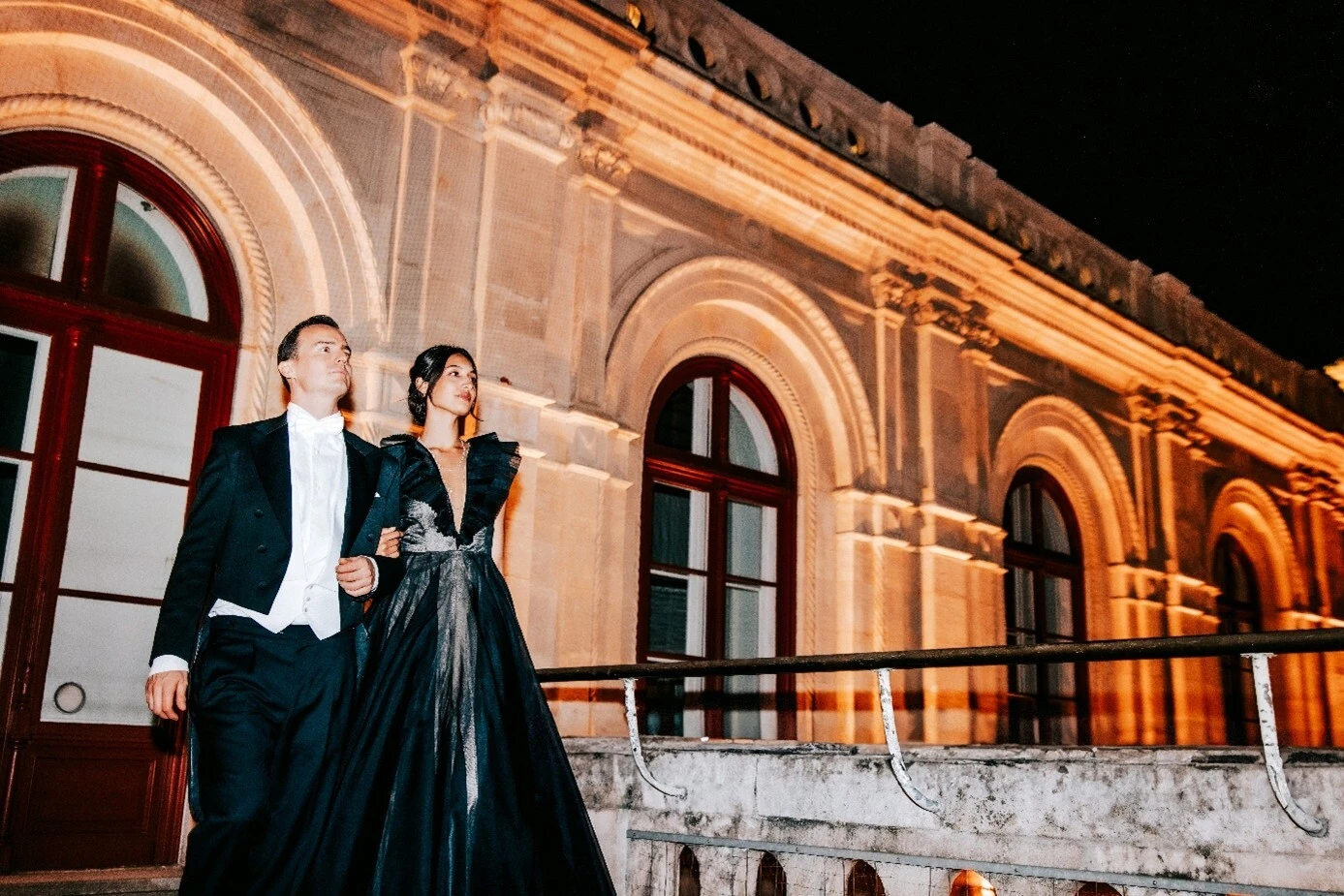
The Vienna Opera Ball is a celebration of elegance, and this is clearly reflected in its dress code. Traditionally, gentlemen appear in tailcoats, while ladies wear floor-length ball gowns. These guidelines play a key role in creating the evening’s unmistakable character.
Detailed dress code guidelines
The dress code of the Vienna Opera Ball is strictly regulated and is carefully checked already upon entry.
• Ladies and their Opera Ball attire
The Opera Ball is the moment for grand gowns. For ladies, a floor-length, formal ball gown is mandatory. A discreet décolleté is permitted, while short cocktail dresses, costumes or everyday attire are not allowed. Traditional international festive dress may be worn as an exception. Wristwatches are considered inappropriate, instead elegant jewellery and a small evening bag are recommended.
• For gentlemen, there is only one dress code
The classic dress code for gentlemen consists of a tailcoat, white bow tie, white waistcoat and black patent leather shoes. A gala uniform is the only accepted alternative. Dinner jackets or suits are not considered appropriate for the Opera Ball.
• Dress code for debutantes
Female debutantes wear a white, floor-length gown, long gloves and the sparkling tiara prescribed by the ball. Strict rules also apply to hairstyles and accessories. Male debutantes wear a tailcoat as well, in accordance with detailed regulations.
Etiquette on the night
• Dress code checks are carried out already at the entrance.
• The dance floor must be kept clear during the official opening ceremony.
• A discreet and respectful approach to photography is expected, particularly towards guests and debutantes.
• Consideration and courtesy are essential when dancing and moving through the ballroom.
There is even a dedicated house code for the Opera Ball, which outlines both the dress regulations and the expected behaviour on site.
Who gets to dance? The debutantes
Young couples from Austria and around the world may apply to take part, women aged 18 to 25 and men aged 18 to 29. Following a selection process that evaluates posture, dance skills and overall presentation, rehearsals begin several weeks before the ball. For many, participation is also a family tradition, with each generation taking part once, provided they are selected. Under professional guidance, an opening is created that continues to captivate millions of viewers year after year.
Schedule of the Opera Ball events
The dress rehearsal – A look behind the scenes
Those wishing to catch a glimpse behind the scenes can attend the Opera Ball’s dress rehearsal on the evening before the event. Choreography, lighting and all procedures are rehearsed one final time. Tickets are significantly more affordable (from €40, as of 2026), and while a strict dress code does not apply, festive attire is expected. For many visitors, this is a charming alternative Opera Ball experience, ideal for those who wish to enjoy the atmosphere with less formality.
The ball night
On the day of the Opera Ball, admission begins in the early evening. The ceremonial opening takes place between 9 and 10 pm, followed by waltzes, the quadrille and dancing well into the early hours, officially until 5 am. Guests traditionally receive a ladies’ gift (also known as the ball gift), presented by the organiser. The Opera Ball is also broadcast via live stream and covered extensively on television.
Culinary delights and decoration
Alongside dance and tradition, the Vienna Opera Ball is also a feast for the senses. Exquisite cuisine and opulent decoration play a key role in creating the event’s distinctive atmosphere, turning the ball night into an experience of the highest standard.
Finest cuisine and beverages
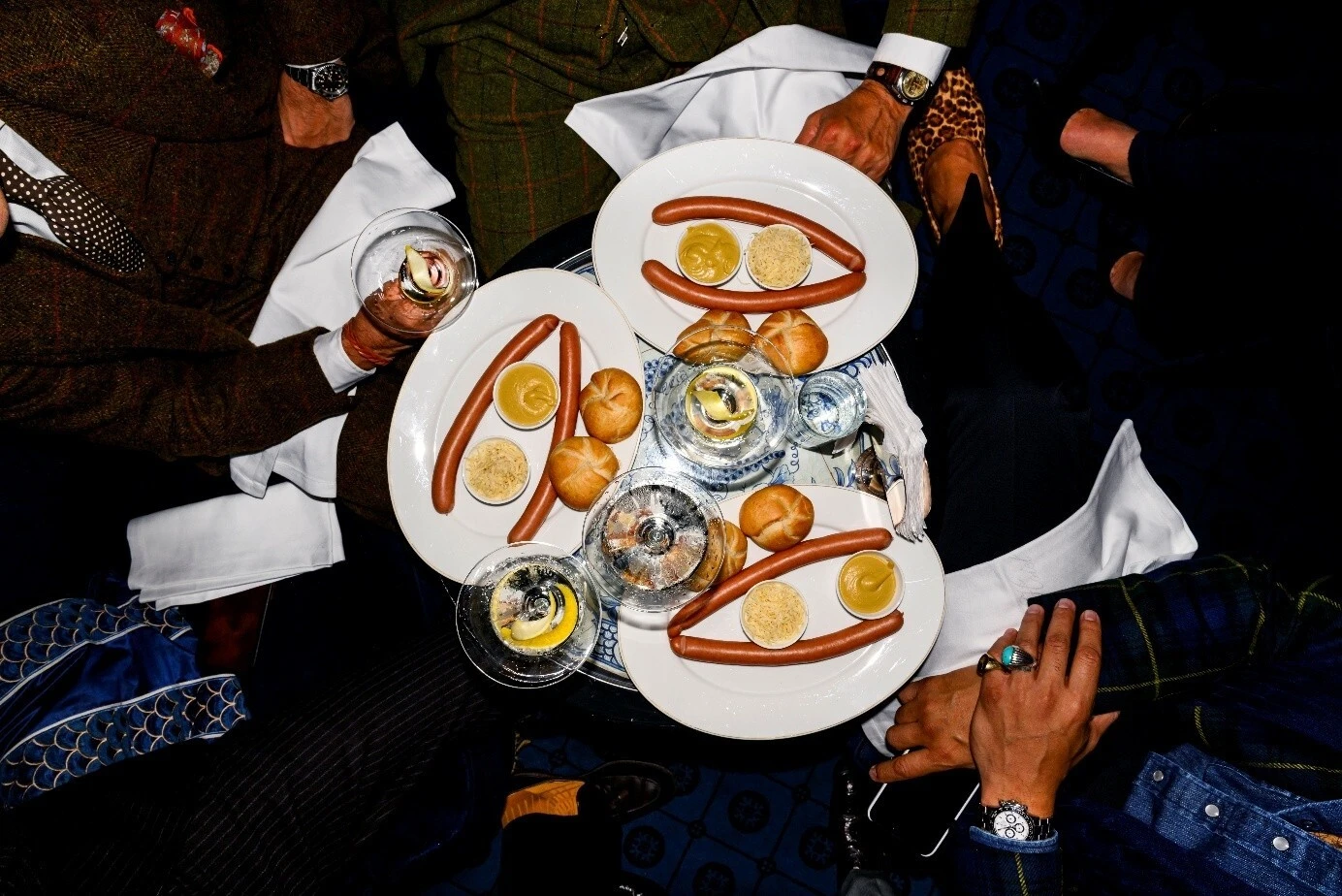
Cuisine plays just as important a role at the Opera Ball as dance and tradition. Renowned partners such as Gerstner, Coca-Cola and Ayala Champagne provide catering that ranges from classic Viennese specialities to luxurious delicacies. Alongside canapés, warm dishes and sweet treats, guests can enjoy highlights such as oysters, caviar and popular Viennese classics, including, of course, the famous Sacher sausage, a much-loved late-night favourite at the Opera Ball.
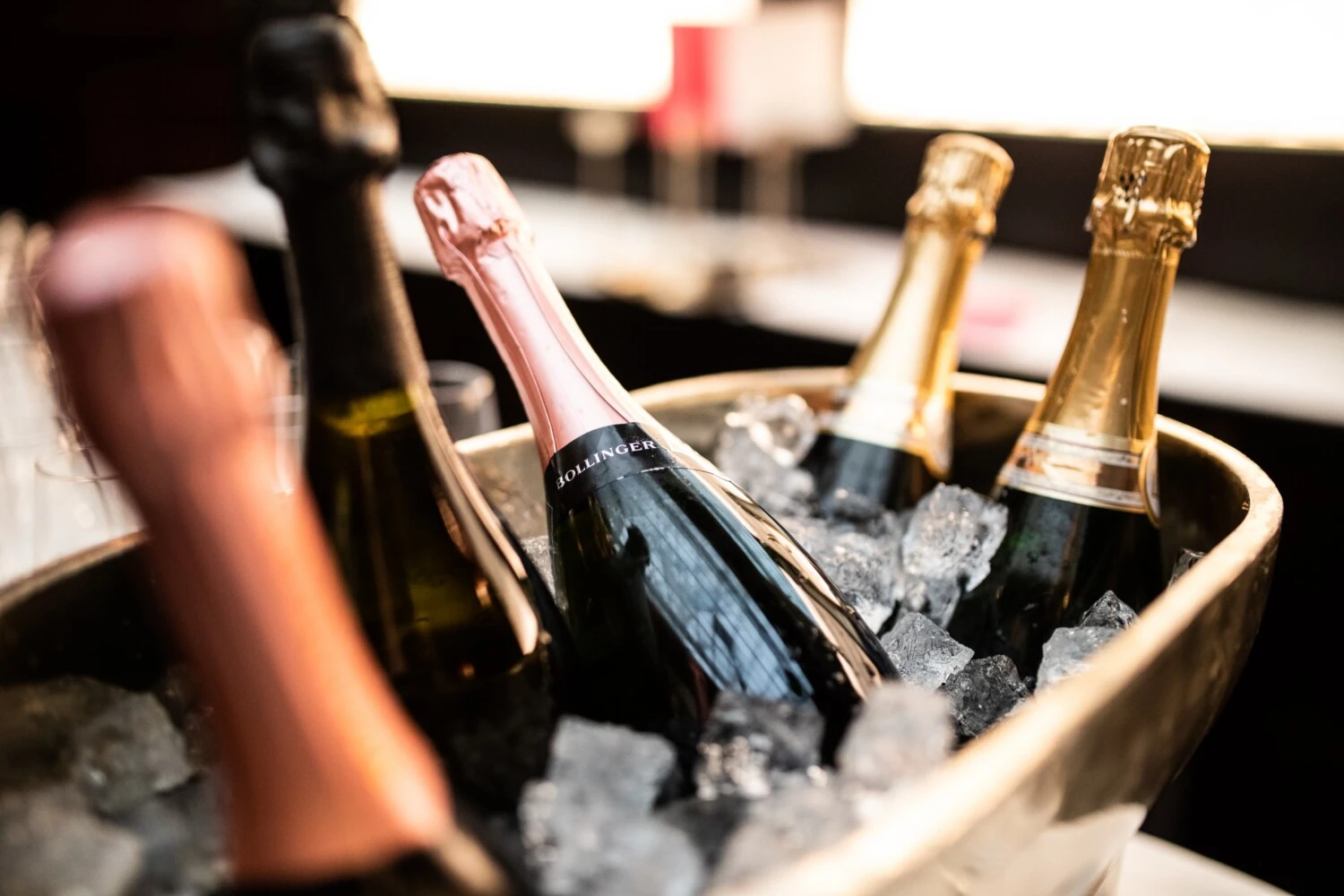
Throughout the State Opera, a variety of bars invite guests to pause and indulge, from champagne and wine bars to charming Heurigen-style areas. Champagne, in particular, has established itself over the years as the Opera Ball’s unofficial drink of choice.
Did you know? According to the Vienna Tourist Board, in just one night, around 52,600 glasses, 9,200 pieces of cutlery and 1,000 champagne coolers are used.
Floral splendour and insider insights
The floral decorations at the Vienna Opera Ball are truly breathtaking. On the night of the ball, the entire Vienna State Opera is transformed by an impressive floral display, with thousands of flowers adorning foyers, boxes and stage areas, a tradition that has shaped the event for decades.
A charming detail: at the end of the night, many guests take home a single flower as a small keepsake of an unforgettable evening.
The perfect start to the Opera Ball at Hotel Sacher Vienna
An Opera Ball evening is truly unique and should be enjoyed without any stress. With the right preparation, refined moments of indulgence and short distances, the ball night becomes an experience that is as relaxed as it is unforgettable. Hotel Sacher Wien provides the perfect setting for just that.
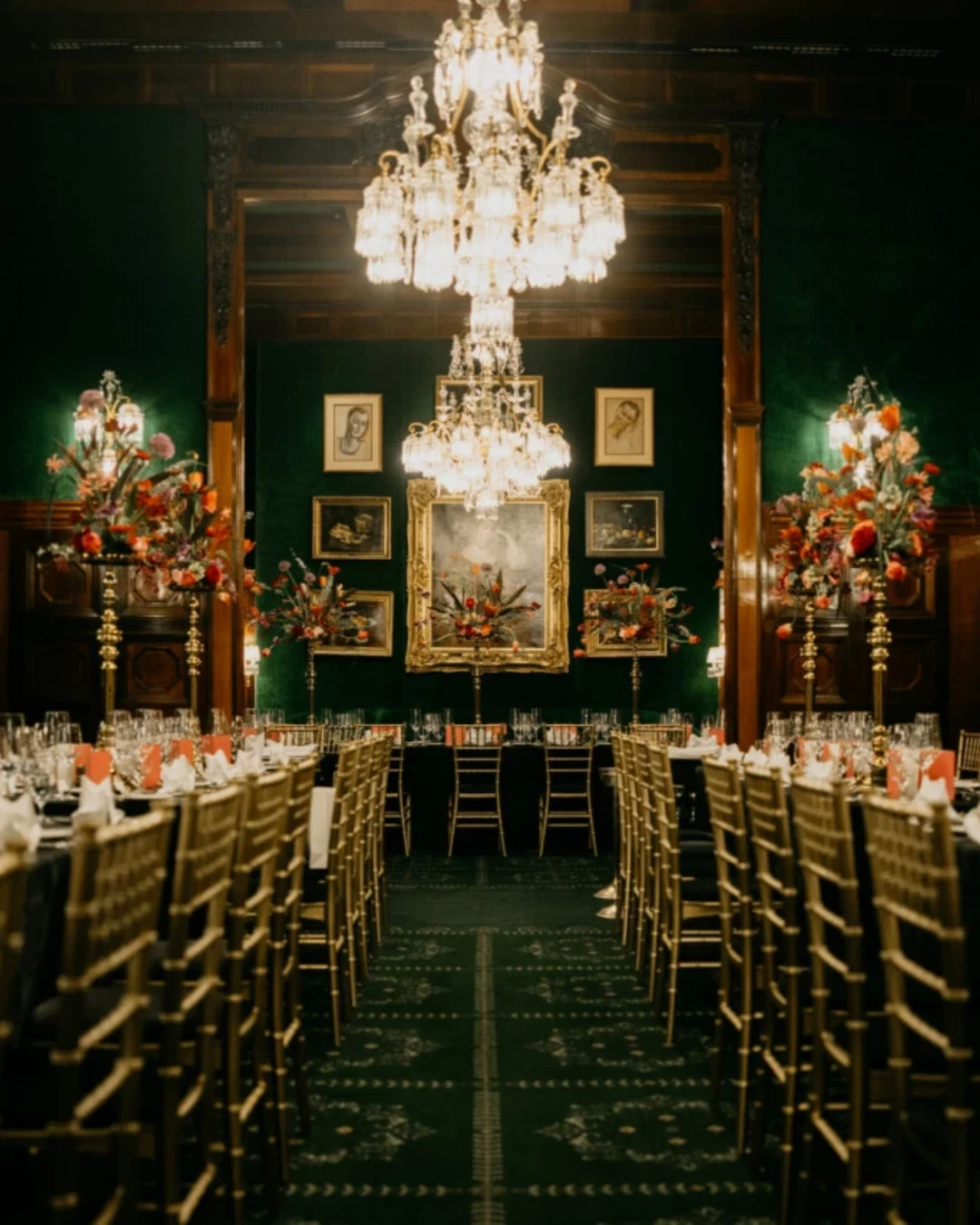
Gala dinner on the eve of the Opera Ball
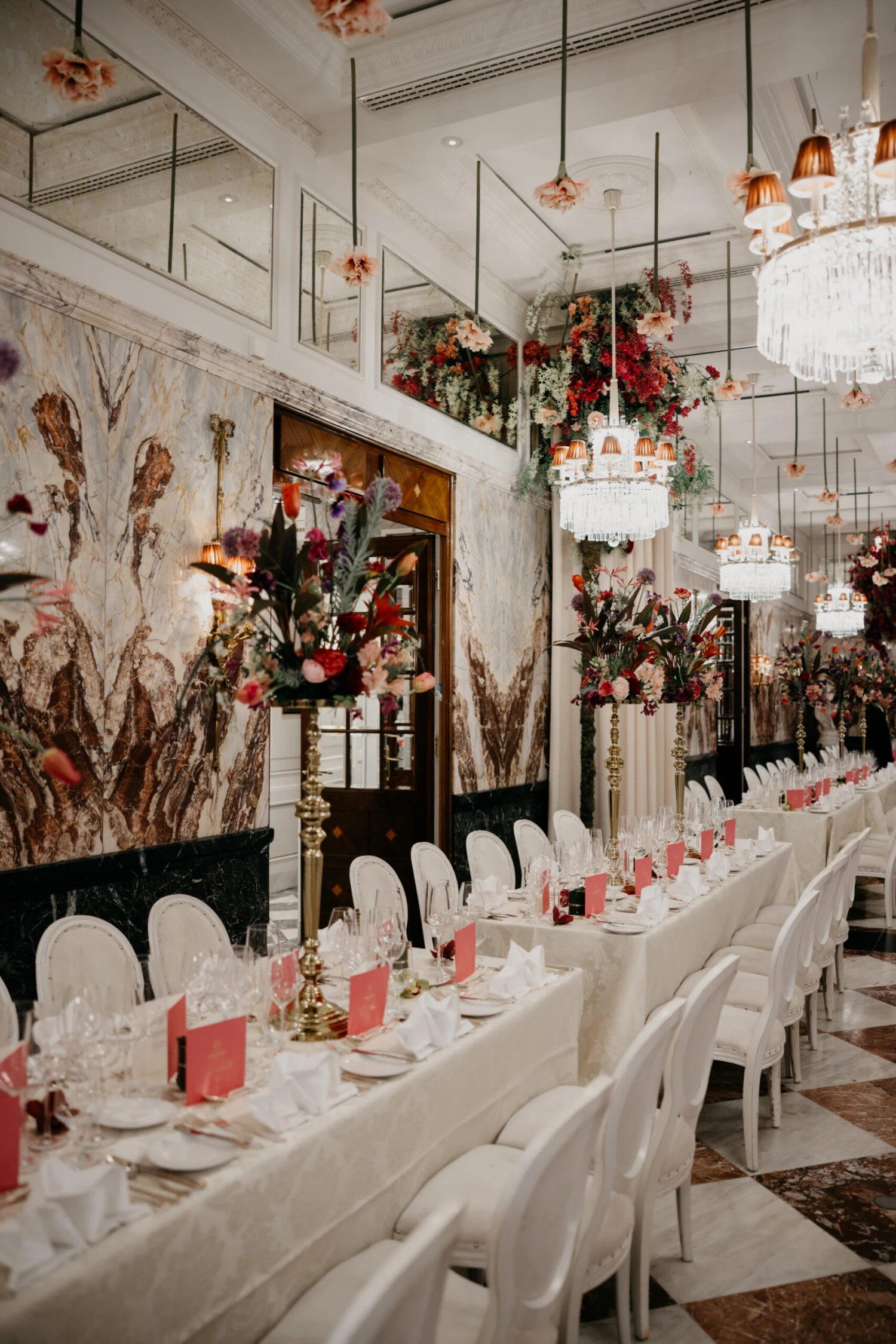
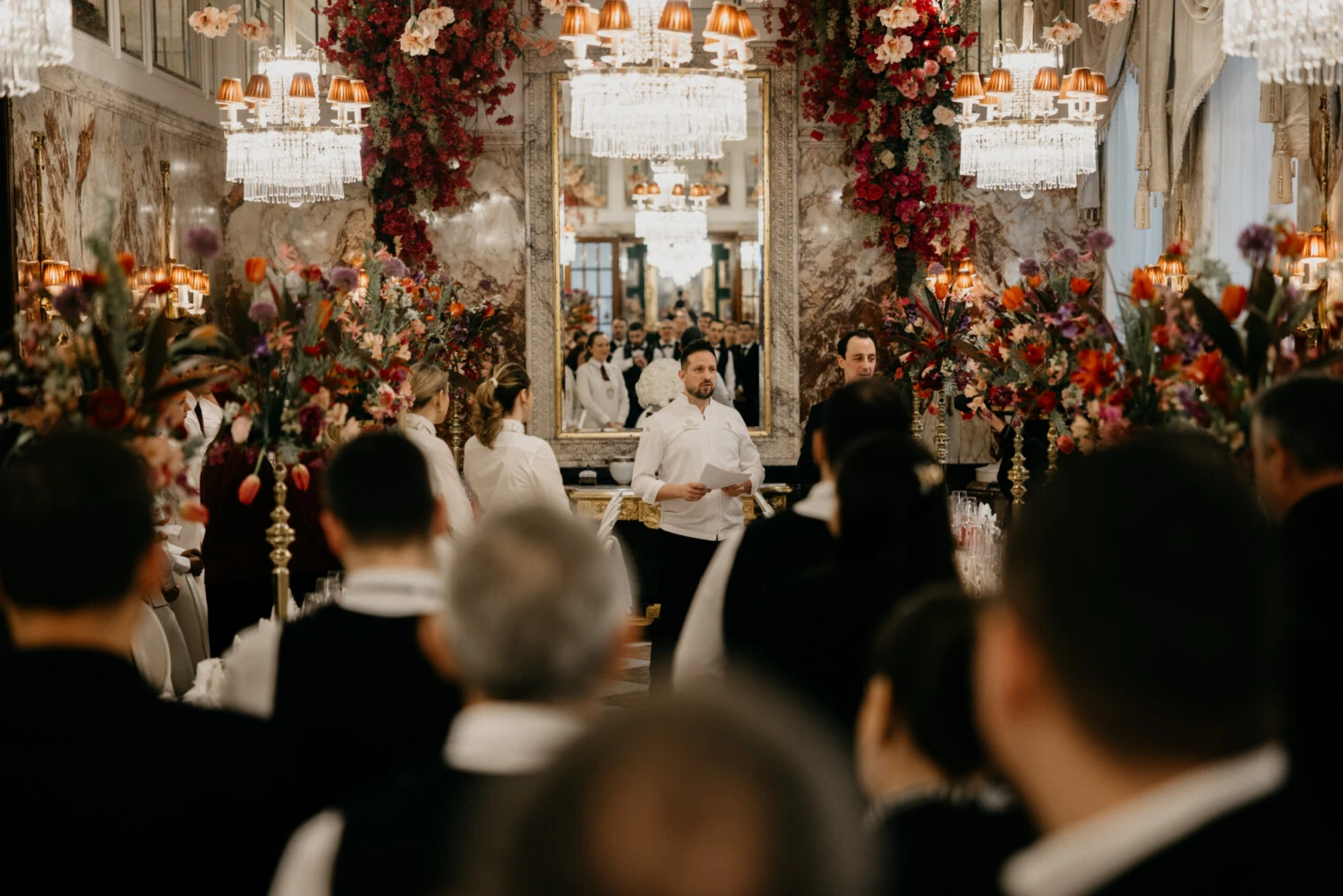
On the evening before the Vienna Opera Ball, Hotel Sacher Vienna invites guests to an exclusive Gala Dinner. It is a refined and culinary highlight, offering a stylish prelude for those wishing to ease into the festive spirit ahead of the ball night. The evening begins at 6:00 pm with a celebratory champagne bar in the lobby, followed by an exquisite five-course gala menu created by Executive Chef Anton Pozeg. Crafted from the finest ingredients and showcasing exceptional culinary artistry, the menu is served in the hotel’s restaurants Rote Bar and Grüne Bar, the cafés of Hotel Sacher, as well as in its elegant event spaces, including the Marble Hall.
Secure Your gala dinner reservation to begin Vienna’s most glamorous ball night in splendid style.
Exclusive On-Site Luxury Styling Services
For a flawless appearance, Hotel Sacher offers professional styling services directly on site. Experienced hairstylists create elegant looks in the comfort of the guest’s own room, while renowned make-up artists, including the Horst Kirchberger Make-up Studio Munich, craft sophisticated make-up looks in the styling lounges of the Sacher Boutique Spa. Appointments can be booked directly via sacherspa@sacher.com.
Tip: Be sure to book several weeks in advance, as demand is usually high.
Tailcoat and gown emergency service
Minor mishaps can happen even shortly before the ball and at Hotel Sacher, they are handled discreetly. Whether it is a bow tie, hem, fastening or even assistance with finding a suitable gown, the Sacher Concierge team is on hand at short notice to ensure every guest enjoys a flawless Opera Ball night.
The perfect finale at Hotel Sacher
After the ball night has drawn to a close, Hotel Sacher Wien remains a popular meeting place for Opera Ball guests.
The Blaue Bar (open from midnight until 7:00 am) and Café Sacher Wien (from 4:00 am) invite guests to unwind and reflect on the splendour of the night in a relaxed atmosphere. A glass of champagne, refined after-hour classics such as Original Sacher sausages (Original Sacherwürstel) or veal cream goulash, and an indulgent breakfast featuring Eggs Benedict, often accompanied by a slice of Original Sacher-Torte, make for a stylish conclusion to the Opera Ball. Located just a few steps from the Vienna State Opera (a welcome advantage, especially for ladies in high heels), this moment has long become a cherished tradition for many ball guests. As Hotel Sacher is particularly popular on Opera Ball night, early reservations are highly recommended and can conveniently be made here. The entire team at Hotel Sacher looks forward to extending the magic of the ball well into the early morning hours.
How can I obtain tickets for the Opera Ball?
Tickets are issued exclusively by the Vienna State Opera. For some categories, waiting lists or allocation procedures apply.
How much does a visit to the Vienna Opera Ball cost?
General admission tickets start at approximately €410. Table seats and boxes are significantly more expensive, with boxes often reaching five-figure sums.
How strict is the dress code at the Vienna Opera Ball?
Very strict. The Opera Ball follows traditional guidelines: tailcoats for gentlemen and floor-length evening gowns for ladies.
Can I attend the Vienna Opera Ball without a tailcoat or evening gown?
No. Dinner jackets, short skirts or cocktail dresses are not permitted. Dress code checks are carried out at the entrance.
Is there a more affordable alternative to attending the Vienna Opera Ball?
Yes. The dress rehearsal on the evening before the ball is more affordable, has no strict dress code and offers a fascinating behind-the-scenes experience.
When will the Vienna Opera Ball 2026 take place?
The next Opera Ball will take place on 12 February 2026 at the Vienna State Opera.